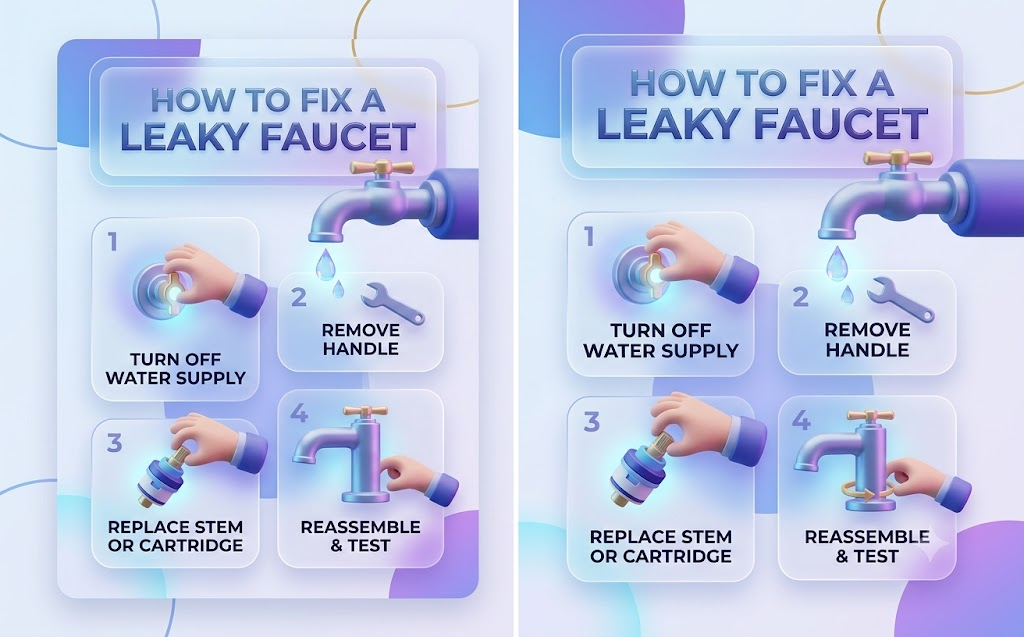
A dripping faucet seems harmless until you check your water bill. The U.S. Environmental Protection Agency estimates that a faucet dripping once per second can waste over 3,000 gallons of water a year — enough to take 180 showers. If you’ve been putting off the repair because it sounds complicated, here’s the good news: learning how to fix a leaky faucet is one of the most beginner-friendly plumbing jobs you can tackle, and in most cases it takes less than an hour with a few basic tools.
This guide walks you through everything the typical “how-to” article leaves out: how to identify your exact faucet type, step-by-step repair instructions for each one, what it costs to DIY versus hire a plumber, and what to do if your fix doesn’t actually stop the leak.
Why Your Faucet Is Leaking in the First Place
Before you pick up a wrench, it helps to understand what’s actually happening inside your faucet. Every faucet relies on small internal parts — washers, O-rings, cartridges, or ceramic discs — to create a watertight seal when you turn the handle off. Over time, these parts wear down from: riproar
- Mineral buildup (especially common in hard-water areas)
- Normal friction and age
- High water pressure straining seals and washers
- Corrosion on internal metal components
- A loose or improperly seated part after a previous repair
Once a seal degrades, water finds its way through — and you get that familiar drip, drip, drip.
Step 1: Identify Your Faucet Type
This is the step most guides skip, and it’s the most important one. The repair process is different depending on which of the four common faucet types you have. Trying to fix a cartridge faucet using compression-faucet instructions is the number one reason DIY repairs fail.
| Faucet Type | How to Identify It | Common in |
|---|---|---|
| Compression | Two separate handles (hot/cold); you must turn firmly until it stops | Older homes (pre-1990s) |
| Cartridge | Single or double handle; lifts and turns smoothly with a stop | Modern kitchen and bathroom sinks |
| Ball | Single handle that moves in any direction; rounded ball mechanism underneath | Kitchen faucets, especially Delta brand |
| Ceramic Disc | Single lever, sits on a wide base; very smooth handle motion | Newer high-end faucets |
If you’re not sure which one you have, remove the handle (instructions below) and look inside — compression faucets have a visible rubber washer at the bottom of the stem, while cartridge and ceramic disc faucets have a sealed cylindrical part instead.
Tools and Parts You’ll Need
Gathering everything upfront saves multiple trips to the hardware store. Here’s a complete checklist: how to fix a squeaky floor
Tools:
- Flathead and Phillips screwdrivers
- Adjustable wrench
- Allen wrench (hex key) set
- Needle-nose pliers
- Plumber’s grease (silicone-based)
- A small towel or rag
- Sink stopper or stopper plug
Replacement parts (buy based on your faucet type):
- Washers (compression faucets)
- O-rings
- Cartridge (matched to your faucet brand/model)
- Valve seat and spring kit (ball faucets)
- Ceramic disc cylinder (disc faucets)
A quick tip before you head to the store: take the old part with you, or take a clear photo of your faucet’s brand stamp (usually on the base or handle). This drastically reduces the chance of buying the wrong replacement.
Step 2: Shut Off the Water Supply
This step is identical no matter which faucet type you have, and skipping it is the fastest way to turn a simple repair into a flooded bathroom. cloudysocial
- Locate the shutoff valves beneath the sink and turn them clockwise until fully closed.
- If there are no valves under the sink (common with older homes or outdoor faucets), shut off the main water supply for the house.
- Turn the faucet handle to the “on” position and let any remaining water drain out completely.
- Place a rag or stopper in the drain so small screws or parts don’t fall down it.
If your shutoff valves are stuck or won’t turn, don’t force them — a stripped valve is a much bigger (and more expensive) repair than a leaky faucet. Call a plumber for that specific step if needed. endbugflow, Feed by way, connecting to wifi, viral manners, networth.
Step 3: Remove the Handle
How you remove the handle depends on your faucet’s design, but the general process looks like this:
- If there’s a decorative cap on top: Pry it off gently with a flathead screwdriver to reveal the screw underneath.
- If there’s a visible set screw: Use an Allen wrench to loosen and remove it.
- Once the screw is out: Pull the handle straight up and off. If it’s stuck from corrosion, wiggle it gently while prying upward — don’t yank, as you can crack the handle or damage the stem.
For shower or tub faucets, there’s usually an extra layer: a metal sleeve or escutcheon (faceplate) covering the valve, which needs to be unscrewed or pulled off before you can access the cartridge or stem.
Step 4: Repair Based on Your Faucet Type
This is where the process splits. Find your faucet type below and follow the matching steps.
Fixing a Compression Faucet (Washer Replacement)
- After removing the handle, use an adjustable wrench to unscrew the packing nut.
- Pull the stem straight out.
- At the bottom of the stem, you’ll find a rubber washer held in place by a brass screw. Remove the screw and the old washer.
- Install a new washer of the exact same size — bring the old one to the store for an exact match.
- Apply a thin layer of plumber’s grease to the new washer and the stem threads.
- Reassemble in reverse order: stem, packing nut, handle, screw, and decorative cap.
Fixing a Cartridge Faucet
- Once the handle is off, use pliers or a wrench to remove the retaining clip or nut holding the cartridge in place.
- Pull the old cartridge straight up and out.
- Insert the new cartridge, lining up the notches exactly as the old one was positioned — misalignment here is the most common reason for a “fixed” faucet to still leak or have hot/cold reversed.
- Replace the retaining clip, handle, and screw. how to fix a running toilet
Fixing a Ball Faucet
- Remove the cap and the cam assembly underneath the handle.
- Lift out the ball mechanism.
- Locate the small rubber seats and springs inside the faucet body — these create the watertight seal and are usually the cause of the leak.
- Remove the old seats and springs, and install new ones (sold as a kit).
- Reinsert the ball, lining up the slot with the pin inside the faucet body.
- Reassemble the cam, cap, and handle.
Fixing a Ceramic Disc Faucet
- Remove the handle and the trim ring underneath it.
- Unscrew the retaining screws holding the ceramic disc cylinder in place.
- Lift out the cylinder and inspect the rubber seals on its underside — these are usually replaceable separately and may be all you need.
- If the seals are heavily worn or the cylinder itself is cracked, replace the entire disc cylinder.
- Reassemble, making sure the cylinder is seated flat before tightening the screws.
Step 5: Reassemble and Test
Once your new part is installed:
- Put all components back together in the reverse order you removed them.
- Avoid overtightening — this is a common mistake that can crack plastic components or warp seals.
- Turn the shutoff valves counterclockwise to restore water flow.
- Run the faucet for 30 seconds, checking closely around the handle base and spout for any new leaks. feedbuzzard
What If the Leak Doesn’t Stop?
This is the step almost every other guide skips entirely. If you’ve replaced the part and the faucet still leaks, use this troubleshooting table:
| Symptom | Likely Cause | What to Do |
|---|---|---|
| Drip continues from the spout | Worn valve seat (not just the washer/cartridge) | Replace or resurface the valve seat |
| Leak at the base of the spout | Damaged O-ring on the spout itself | Remove spout, replace O-ring, apply plumber’s grease |
| Leak around the handle | Packing nut too loose, or O-ring inside handle is worn | Tighten packing nut slightly; replace handle O-ring |
| Hot and cold are reversed | Cartridge installed upside down or misaligned | Remove and reinstall cartridge, matching notches exactly |
| Leak persists no matter what | Worn-out faucet body or internal corrosion | Consider replacing the entire faucet |
If you’ve gone through this checklist and the faucet is still leaking, it may genuinely be time to call a professional rather than keep guessing.
DIY Cost vs. Hiring a Plumber
One thing most “how to fix a leaky faucet” articles never mention clearly: how the cost actually breaks down. Here’s a realistic comparison for U.S. homeowners in 2026.
| Repair Method | Typical Cost | Notes |
|---|---|---|
| DIY (washer/O-ring only) | $2 – $10 | Cheapest fix; works for minor leaks |
| DIY (cartridge replacement) | $15 – $60 | Cost varies by faucet brand |
| Professional plumber (simple repair) | $150 – $350 | Includes labor + parts |
| Professional plumber (complex repair) | $200 – $500+ | Bathtub/shower faucets cost more due to wall access |
| Full faucet replacement | $170 – $1,000+ | Depends on faucet quality and labor |
Plumber hourly rates generally range from $45 to $200, with urban areas (like New York or San Francisco) on the higher end and smaller towns on the lower end. Emergency or after-hours repairs typically add another $50 to $150 to the total.
When DIY Makes Sense
- The leak is minor and consistent (not sudden or severe)
- You can clearly identify the faucet type
- You have access to the shutoff valves and they work properly
- The faucet is a standard kitchen or bathroom sink model
When to Call a Plumber Instead
- The shutoff valves are stuck, corroded, or missing
- You notice water damage, mold, or soft spots near the faucet
- The leak is coming from inside a wall (shower/tub valve)
- You’ve already tried the fix above and the leak persists
- The faucet is old, brittle, or visibly cracked
Calling a plumber isn’t a failure — some leaks, especially shower and tub valve issues, involve wall access and plumbing connections that carry real risk of water damage if handled incorrectly.
Preventing Future Leaks
Once your faucet is fixed, a few habits can keep it that way for years:
- Avoid overtightening the handle when turning the faucet off — this wears down washers and seals faster.
- Check your home’s water pressure periodically; consistently high pressure puts extra strain on internal components.
- Clean the aerator every few months to prevent mineral buildup, which can mimic the symptoms of a leak.
- Replace washers and O-rings proactively every few years in high-use faucets, rather than waiting for a full leak.
- Use plumber’s grease on any rubber parts during reassembly to extend their lifespan.
Quick Reference: Faucet Repair Checklist
Before you start, make sure you have:
- [ ] Identified your faucet type (compression, cartridge, ball, or disc)
- [ ] Shut off the water supply and drained the line
- [ ] Gathered the correct tools and matching replacement parts
- [ ] A stopper or rag in the drain to catch small parts
- [ ] Plumber’s grease for reassembly
Following this order — diagnose, prep, repair, test, troubleshoot — is the difference between a 30-minute fix and a frustrating afternoon of trial and error.
Frequently Asked Questions
How long does it take to fix a leaky faucet?
Most simple repairs, like replacing a washer or O-ring, take 20 to 45 minutes once you have the correct parts on hand.
Why is my faucet still leaking after I replaced the washer?
The valve seat may also be worn, or the new washer may not be the exact size and material match for your faucet model.
Can a leaky faucet increase my water bill?
Yes — a faucet dripping once per second can waste over 3,000 gallons of water per year, which directly impacts your utility costs.
Is it cheaper to repair or replace a leaky faucet?
Repair is almost always cheaper in the short term, but if the faucet body itself is corroded or cracked, replacement may save money long-term.
Do I need to turn off my entire house’s water supply?
Only if your sink doesn’t have individual shutoff valves underneath it; otherwise, you can isolate just that fixture.
What’s the most common cause of a leaky faucet?
A worn-out washer, O-ring, or cartridge is the most common cause, especially in faucets that are five years or older.
Can I fix a leaky faucet without turning off the water?
No — water will continue flowing and spraying while you work, making the repair messy and unsafe. Always shut off the supply first.
How do I know if I need a plumber instead of doing it myself?
If the leak persists after replacing the obvious parts, or if you notice water damage near the faucet, it’s time to call a licensed plumber.
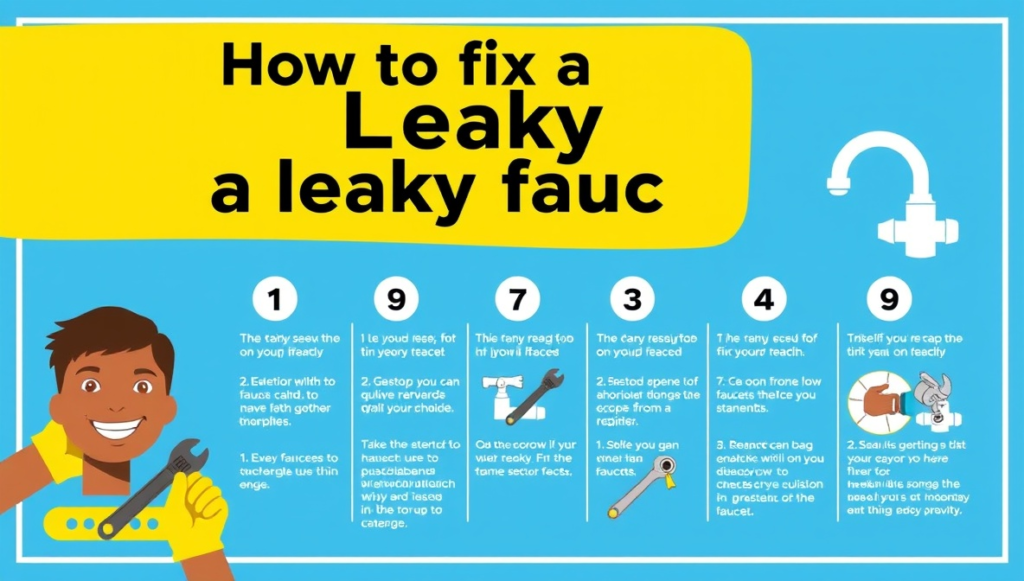
Conclusion
A leaky faucet is one of the most common — and most fixable — problems in any home. Once you know how to identify your faucet type, gather the right parts, and follow the correct repair steps, most leaks can be stopped in under an hour without calling a plumber. The key is diagnosing the problem correctly the first time: a worn washer, a damaged O-ring, or a misaligned cartridge are usually the real culprits behind that persistent drip.
If you’ve worked through the steps above and the leak still won’t quit, don’t keep guessing — that’s usually a sign of a deeper issue like a worn valve seat or a faucet body that’s reached the end of its life, and a licensed plumber can save you time and frustration at that point. But for the vast majority of homeowners, learning how to fix a leaky faucet yourself means a quieter house, a lower water bill, and one less thing on your to-do list.
