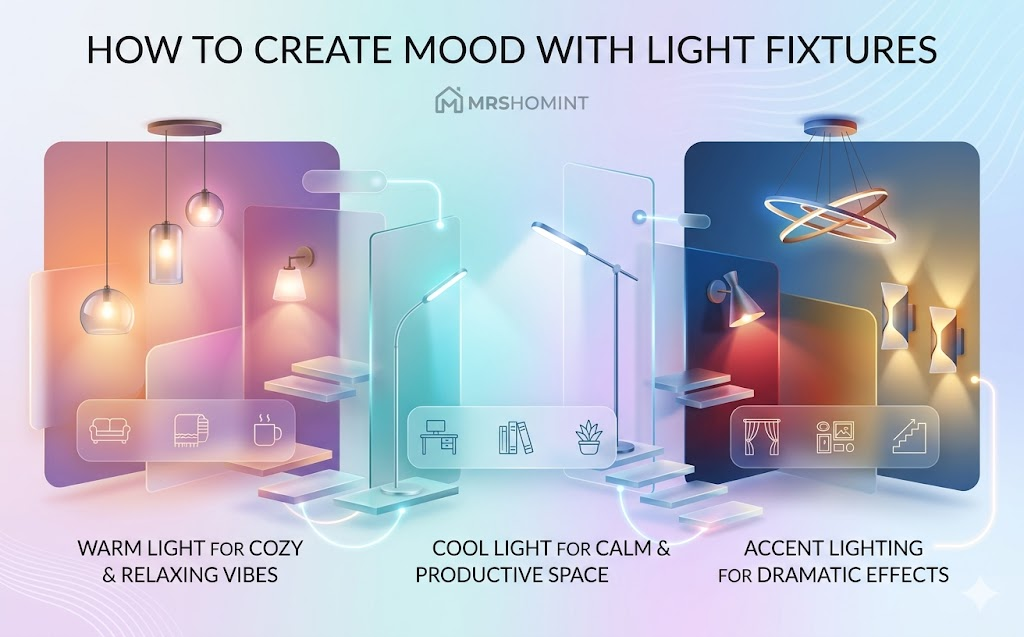
Walking into a home that instantly feels warm, calm, and put-together usually has very little to do with paint color or furniture. It’s the lighting. Learning how to create mood with light fixtures mrshomint style means understanding that light isn’t just functional — it’s emotional. The right fixture, placed correctly, with the right color temperature, can turn a flat, sterile room into a space people don’t want to leave.
This guide breaks the process down into a system you can actually use: the three layers of lighting, exact Kelvin numbers for every mood, room-by-room fixture recommendations, smart lighting upgrades, common mistakes, and budget tiers. No vague advice — just a practical framework.## Why Lighting Controls Mood More Than Anything Else in Your Home
Before getting into fixtures, it helps to understand why light has this effect. Brighter, cooler light tends to make people feel alert and energized. Dimmer, warmer light slows things down — it signals to your brain that it’s time to relax. This is the same reason a candlelit dinner feels intimate while a fluorescent-lit office feels anything but.
Most homes rely on a single overhead fixture to do all the work. That’s the root problem. One ceiling light, no matter how nice, can’t create mood — it can only create brightness. Mood comes from combining different light sources at different heights, intensities, and color temperatures throughout a room.
This is the core idea behind learning how to create mood with light fixtures mrshomint principles emphasize: layering, not just illuminating.
The 3 Layers of Lighting You Need in Every Room
Professional lighting design always comes back to three categories. Skipping any one of them is usually why a room feels “off” even when the furniture and paint are right.
Ambient Lighting
This is your base layer — the general light that fills the room. Ceiling fixtures, recessed lights, and large pendants fall into this category. Ambient lighting should never be the only light source if you’re trying to create mood, because it tends to flatten a room and create harsh shadows when used alone.
Task Lighting
Task lighting is targeted and functional: desk lamps, reading lights, under-cabinet kitchen lighting. It’s not about mood directly, but a missing task layer often forces people to over-brighten their ambient lighting just to read or cook — which kills the atmosphere everywhere else in the room.
Accent Lighting
This is where the actual mood-building happens. Wall sconces, picture lights, LED strips, and uplights fall here. Accent lighting draws the eye, creates depth, and softens the harshness of overhead light. If you only add one new fixture type to a room, make it accent lighting.
The layering rule of thumb: aim for at least three separate light sources per room, at three different heights (ceiling, eye-level, and floor/table level). This single change does more for mood than any single “statement fixture” ever will.
Color Temperature: The Number Most People Ignore
If you only take one technical detail from this guide, make it this: Kelvin (K) rating matters more than fixture style. A beautiful sconce with the wrong color temperature will still make a room feel cold and uninviting.
| Kelvin Range | Light Appearance | Mood Created | Best Rooms |
|---|---|---|---|
| 2000K–2700K | Warm amber/candlelight | Cozy, intimate, relaxed | Bedroom, living room, dining room |
| 2700K–3000K | Soft warm white | Calm, welcoming | Hallways, foyers, family rooms |
| 3100K–4000K | Neutral white | Balanced, alert but comfortable | Kitchen, bathroom, home office |
| 4000K–5000K | Cool/daylight white | Energizing, focused, clinical | Garages, workshops, laundry rooms |
Anything above 5000K starts to feel sterile and is rarely the right choice for residential mood lighting, no matter the room.
Room-by-Room Guide to Mood Lighting
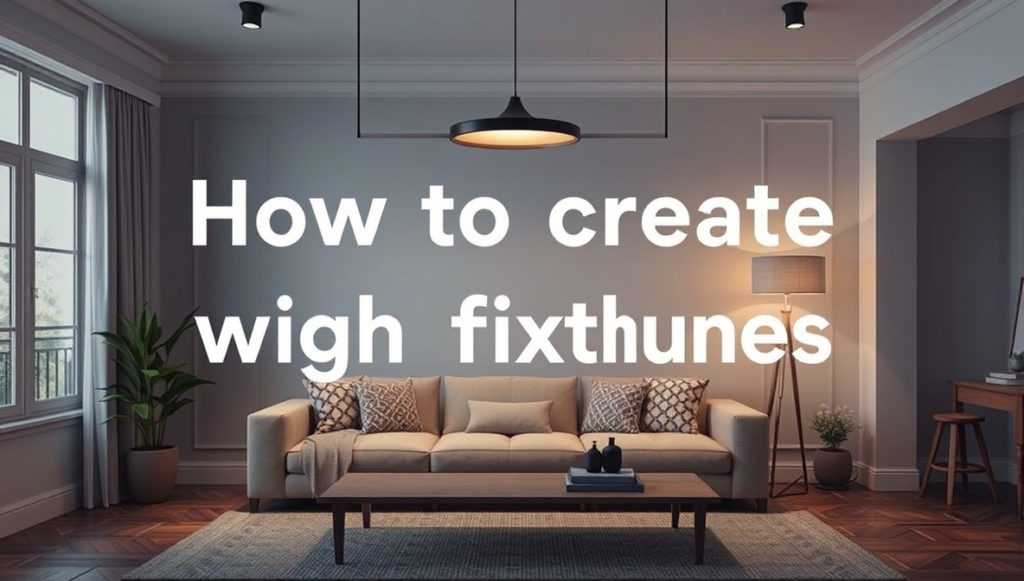
Understanding how to create mood with light fixtures mrshomint-style really comes down to applying the layering and Kelvin rules differently in each room of the house. Here’s how to break it down.
Living Room
The living room needs the most flexibility since it serves multiple purposes — relaxing, entertaining, watching TV, reading.
- Ambient: A dimmable ceiling fixture or recessed lighting, 2700K–3000K
- Task: A floor lamp beside the main reading chair
- Accent: Wall sconces or a picture light over artwork, 2700K
- Placement tip: Keep wall sconces at eye level to avoid glare and reflections on TV screens### Bedroom
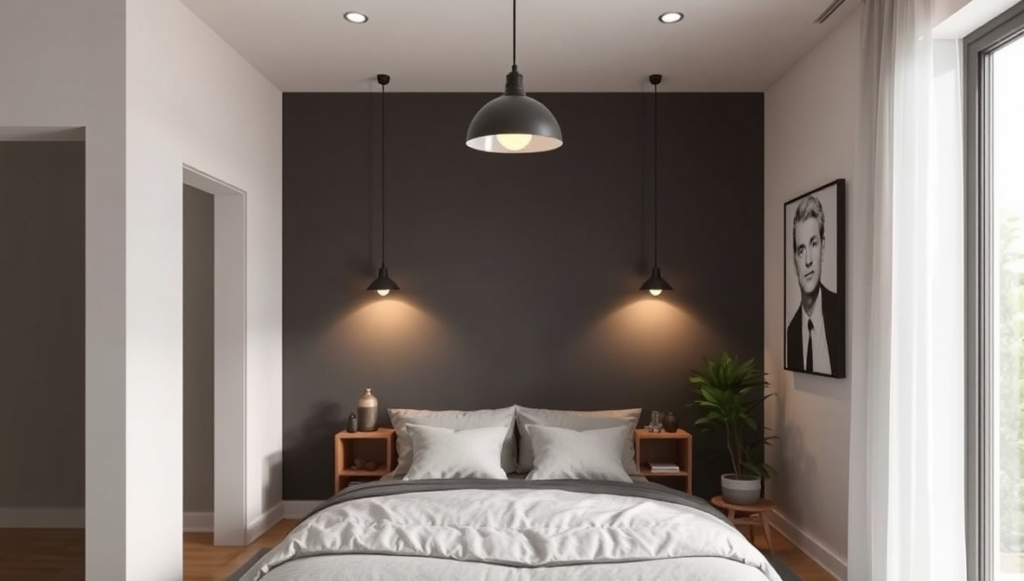
This is the room where mood lighting matters most, since it directly affects sleep quality.
- Ambient: Low-output ceiling fixture or none at all if natural light is sufficient during the day
- Task: Bedside table lamps with dimmable, warm bulbs (2700K)
- Accent: Wall sconces flanking the bed, or concealed LED strips behind the headboard
- Avoid: Bright overhead lighting in the evening — it suppresses melatonin and works against the room’s purpose
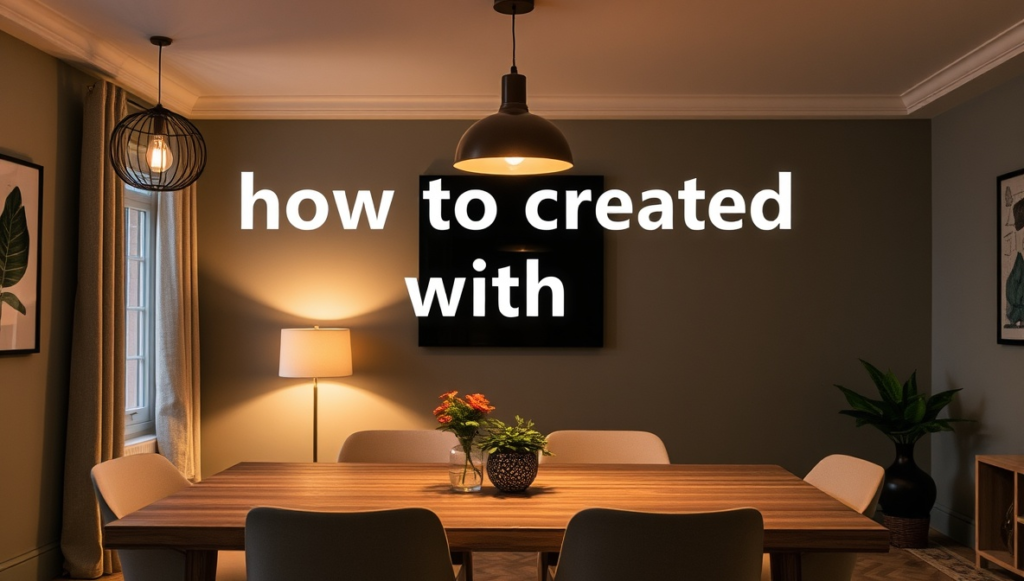
Dining Room
- Ambient: A dimmable chandelier or pendant positioned directly above the table
- Task: Minimal — dining doesn’t usually require dedicated task lighting
- Accent: Wall sconces along the perimeter for depth
- Placement tip: Hang the main fixture 30–36 inches above the tabletop for the most flattering light on faces
Kitchen
Kitchens need brighter, cooler light for food prep but should still allow for a relaxed evening mood.
- Ambient: Recessed lighting, 3000K–3500K
- Task: Under-cabinet LED strips for countertops
- Accent: Pendant lights over an island, slightly warmer at 2700K–3000K, to soften the space at night
- Bonus tip: Put task and ambient lighting on separate switches so you can dim the overhead light while prepping with under-cabinet lights still on
Home Office
- Ambient: Neutral white ceiling or recessed lighting, 3500K–4000K
- Task: Desk lamp with an adjustable arm, similar Kelvin range to reduce eye strain
- Accent: Optional — a floor lamp in a reading corner for after-hours use
- Why it matters: Cooler light supports focus and alertness during work hours, but having a warmer accent option helps the room transition into evening use
Outdoor / Patio
- Ambient: String lights or a flush-mount porch fixture, 2700K
- Task: Step lights or path lighting for safety
- Accent: Lanterns or color-changing RGB fixtures for entertaining
- Tip: Stick to warm tones outdoors — cool white outdoor lighting tends to feel institutional rather than inviting
Fixture Types Explained
Not all fixtures serve the same purpose. Here’s a quick breakdown of what each one is actually good for:
- Pendant lights — best for focused ambient lighting over tables, islands, or entryways
- Wall sconces — the most versatile accent fixture; soften shadows and add height variation
- Torchiere lamps — direct light upward, good for bouncing soft light off ceilings in larger rooms
- Cove lighting / LED strips — hidden light sources that create a glow without a visible fixture, ideal for headboards, shelving, or ceiling trim
- Chandeliers — statement ambient fixtures, best with a dimmer to avoid overwhelming smaller rooms
- Table and floor lamps — flexible task and accent lighting that can be moved as needs change
Smart Lighting: The Easiest Upgrade for Mood Control
If you’re serious about how to create mood with light fixtures mrshomint setups should also include smart lighting, since it removes the guesswork entirely.
- Smart bulbs (like Philips Hue or Govee) let you adjust both brightness and color temperature from a phone app, no rewiring required
- Smart dimmer switches (like Lutron Caseta) work with existing fixtures and can be scheduled to shift color temperature automatically as the day progresses
- Voice control through Alexa or Google Home makes adjusting mood lighting effortless during dinner parties or movie nights
- Scenes and schedules allow you to save preset combinations — “Relax,” “Reading,” “Dinner Party” — so you’re not manually adjusting five fixtures every time
Smart lighting is one of the few upgrades that improves mood lighting without requiring any new fixtures at all — just swap the bulbs. how to fix a sticky door
Common Mistakes That Ruin Mood Lighting
Even with good fixtures, a few habits consistently undo the effect:
- Relying on a single overhead light as the only source in the room
- Mixing different color temperatures in the same space (e.g., 2700K lamps next to 4000K overhead lights)
- Skipping dimmers entirely, which removes flexibility for different times of day
- Placing wall sconces too high or too low, causing glare instead of a soft wash of light
- Over-lighting a room meant for relaxation, which keeps it feeling more like a workspace
- Forgetting bulb wattage limits on fixtures, which can damage sockets or void warranties
Budget Tiers for Mood Lighting Upgrades
You don’t need a full renovation to apply how to create mood with light fixtures mrshomint principles. Here’s what’s realistic at different budget levels:
| Budget | What You Can Do |
|---|---|
| Under $50 | Swap bulbs for dimmable, warm-temperature LEDs; add a basic table lamp |
| $50–$200 | Add one or two wall sconces; install a plug-in dimmer; buy a smart bulb starter kit |
| $200+ | Hire an electrician for hardwired sconces or a dimmer switch; install under-cabinet LED strips; add a statement pendant or chandelier |
Small, layered changes consistently outperform a single expensive fixture when the goal is mood rather than just brightness.
Frequently Asked Questions
What color temperature is best for mood lighting?
Warm white light between 2700K and 3000K is generally best for creating a cozy, relaxed mood in living rooms and bedrooms.
How many light sources should a room have for good mood lighting?
Aim for at least three light sources per room at different heights — ambient, task, and accent — rather than relying on one overhead fixture.
Are dimmer switches necessary for mood lighting?
They’re not strictly necessary, but dimmers make it far easier to adjust a room’s mood throughout the day without buying multiple fixtures.
Can smart bulbs replace the need for multiple fixtures?
Smart bulbs help by letting you adjust brightness and color temperature instantly, but layering with separate fixtures still creates better depth and shadow control.
What’s the difference between ambient, task, and accent lighting?
Ambient lighting fills the room generally, task lighting targets specific activities like reading or cooking, and accent lighting highlights features or adds atmosphere.
Is warm or cool lighting better for a home office?
Neutral to cool white light (3500K–4000K) supports focus and alertness during work hours better than warm light.
Final Thoughts
Mastering how to create mood with light fixtures mrshomint guidance recommends isn’t about buying the most expensive chandelier in the store. It’s about understanding three things: layering your light sources, choosing the right color temperature for each room, and placing fixtures where they’ll actually soften shadows instead of creating them. Start with one room, apply the layering rule, swap in a few warm-temperature bulbs, and you’ll notice the difference immediately — long before you’ve spent a fortune on new fixtures.
