Discovering mold in your rental unit is stressful — and the first question most tenants ask is a simple one: how long does my landlord have to fix mold? The frustrating truth is there’s no single national answer. The United States has no federal mold law, which means your rights depend entirely on your state, the severity of the mold, and how you report it.
This guide gives you what competitors don’t: a state-by-state breakdown, a day-by-day action plan, a written notice template, and real legal outcomes — so you can stop guessing and start acting.
The Short Answer: What “Reasonable Time” Actually Means
Most tenants are told “your landlord has 30 days.” That’s technically true in many states — but it’s dangerously incomplete.
Courts and state statutes actually recognize three urgency tiers for mold repairs:
| Urgency Tier | Mold Type / Situation | Expected Landlord Response |
|---|---|---|
| Emergency | Toxic black mold, mold causing active illness, uninhabitable unit | 24–96 hours to contain and begin remediation |
| Standard | Visible mold linked to a leak, water damage, or ventilation failure | 7–30 days depending on state law |
| Complex Remediation | Mold inside walls, beneath floors, or covering large surface areas | 30+ days with documented professional plan |
The difference matters enormously. If you have black mold (Stachybotrys chartarum) spreading behind your bathroom wall and you’re experiencing respiratory symptoms, your landlord doesn’t get 30 days to leisurely hire someone. In Colorado, for example, landlords must respond within 24 hours and begin containment within 72–96 hours under C.R.S. 38-12-503. Treating every mold situation as a standard 30-day repair is a mistake both tenants and many landlords make.
No Federal Mold Law — Your State Is Everything
Here’s something most articles bury in a footnote: there is no federal law that specifically governs how long a landlord has to fix mold. The EPA provides guidance. OSHA has workplace standards. But for residential rental properties, Congress has never passed mold-specific legislation.
This means:
- Your rights are defined by your state’s warranty of habitability
- Local city and county ordinances may add stricter requirements
- Lease language can sometimes shift responsibility — though it cannot eliminate the landlord’s core duty to provide habitable housing
- If your state has no explicit mold statute, courts fall back on general habitability standards
The practical takeaway: you must know your state’s law before you act. The table below is your starting point.
State-by-State Landlord Mol
d Repair Timelines
The following covers key states with defined mold rules or strong habitability frameworks. States not listed typically default to a “reasonable time” standard under their warranty of habitability, which courts generally interpret as 7–30 days.
| State | Repair Timeline | Key Law / Statute | Rent Withholding | Repair & Deduct |
|---|---|---|---|---|
| California | 30 days (standard); sooner for toxic mold | Civil Code §§1941.1, 1942; Health & Safety Code §17920.3; SB 655 (2024) | ✅ Yes | ✅ Yes (up to 1 month’s rent, twice per year) |
| Texas | 7 days (reasonable time after proper notice) | Texas Property Code §92.056 | ✅ Yes (if not delinquent in rent) | ✅ Yes (capped at greater of 1 month’s rent or $500) |
| Colorado | 24 hrs to respond; 72–96 hrs to begin containment | C.R.S. 38-12-503; HB19-1170; SB24-094 | ✅ Yes | ✅ Yes (48-hr notice for health emergencies) |
| New York | Reasonable time; NYC requires licensed pros for 10+ sq ft | N.Y. Real Prop. Law; NYC Admin. Code §24-154 (2026) | ✅ Yes (escrow recommended) | ✅ Conditional |
| Washington | Reasonable time under RCW 59.18 | Residential Landlord-Tenant Act (RCW 59.18) | ✅ Yes | ✅ Yes |
| Florida | 7 days for written notice response | Florida Statute §83.51 | ✅ Conditional | ✅ Conditional |
| Pennsylvania | No specific timeline; “prompt” action required | Implied warranty of habitability | ✅ Conditional | ❌ Limited |
| Minnesota | 14 days recommended in written notice | Minnesota Statutes Chapter 504B | ✅ Yes (rent escrow) | ✅ Conditional |
| Illinois | 14 days (Chicago: 5 days for urgent repairs) | Chicago RLTO §5-12-110 | ✅ Yes (Chicago) | ✅ Yes (Chicago) |
Note: Laws change. Always verify your state’s current statute or consult a licensed tenant-rights attorney before taking legal action such as withholding rent.
Step-by-Step: What to Do From Day 1 to Day 30+
This is the section most tenant guides skip entirely. Knowing your landlord has 30 days is useless without knowing what you should be doing during those 30 days.
Day 1: Document Everything
Before you send a single text or email, document the mold thoroughly.
- Take date-stamped photos and videos of all visible mold, water stains, and affected surfaces
- Write down the location, approximate size, and any odors
- Note any health symptoms you or household members are experiencing — dates, severity, and whether symptoms improve when you leave the property
- If you or a family member visited a doctor due to symptoms, save those records
This documentation becomes your evidence in housing court, code enforcement complaints, and personal injury claims. Courts increasingly treat poor indoor environments as legitimate habitability violations — and documentation is what wins those cases.
Day 1–3: Send Written Notice to Your Landlord
Verbal complaints don’t start the legal clock. Written notice does. Here’s what your notice must include:
- Your name and full rental address
- The date of the notice
- A description of the mold: where it is, how large, how long it’s been present
- Any related issues (visible water damage, leaks, musty odors)
- Any health symptoms linked to the mold
- A clear request for inspection and remediation
- A stated response deadline based on your state’s law
Send it via certified mail with return receipt or hand-deliver it and photograph the delivery with a signed acknowledgment. In California, that certified mail receipt proves exactly when the 30-day clock started — and triggers a 180-day anti-retaliation protection under Civil Code 1942.5. In Texas, certified mail removes the requirement to send a second notice before pursuing legal remedies.
Sample Written Notice Language
“I am writing to formally notify you that mold has been discovered at [address], in the [location, e.g., bathroom and bedroom wall]. This condition appears to be linked to [cause, if known, e.g., a plumbing leak reported on X date]. I am requesting that you inspect and remediate this condition within [X days per your state law]. I have documented this issue with photographs dated [date]. Failure to address this within the required timeframe may result in rent withholding, a formal complaint with [local code enforcement or health department], or legal action.”
Adapt this language to your situation. Keep a copy.
Day 7: Follow Up in Writing
If you haven’t received a response or an inspection has not been scheduled, send a follow-up notice. Reference your original notice date and restate the deadline. Keep this communication in writing — not just text messages, but email at minimum.
Day 14: Escalate If Needed
If the landlord has acknowledged the issue but progress has stalled, this is your escalation point. Options include:
- Contact local code enforcement or housing inspection — they can issue citations and require repairs with their own enforcement timelines
- Contact your local health department — particularly powerful for toxic mold situations; health officials can declare a property a public health nuisance and issue correction orders
- Document all landlord communication — including promises made verbally (follow them up in writing: “As discussed today, you agreed to begin remediation by…”)
Day 30+: Legal Options If Your Landlord Hasn’t Acted
This is where tenants have the most power — and make the most mistakes by acting without legal guidance. how to unjam a garbage disposal
Options available depending on your state:
- Rent withholding: Stop paying rent until mold is remediated. This is powerful but risky. Most states require you to have given proper written notice, allowed reasonable time, and not be delinquent in rent. Place withheld rent in an escrow account — if your landlord sues for non-payment, you’ll need to prove the unit was uninhabitable.
- Repair and deduct: Hire a licensed professional, pay for the remediation yourself, and deduct the cost from rent. State-specific rules apply. Texas caps this at the greater of one month’s rent or $500. California allows it twice per year up to one month’s rent.
- Lease termination (constructive eviction): If the mold has made your unit uninhabitable and your landlord refuses to act, you may be able to terminate your lease without penalty. This requires documentation and, in most states, a formal written notice of intent to terminate.
- File suit: You can sue for damages including medical expenses, damaged personal property, moving costs, lost wages, and a rent refund for the period you lived in unsafe conditions. Courts may award additional damages in negligence cases.
Black Mold vs. Regular Mold — Does It Change the Timeline?
Yes, significantly. Not all mold is equal in the eyes of the law.
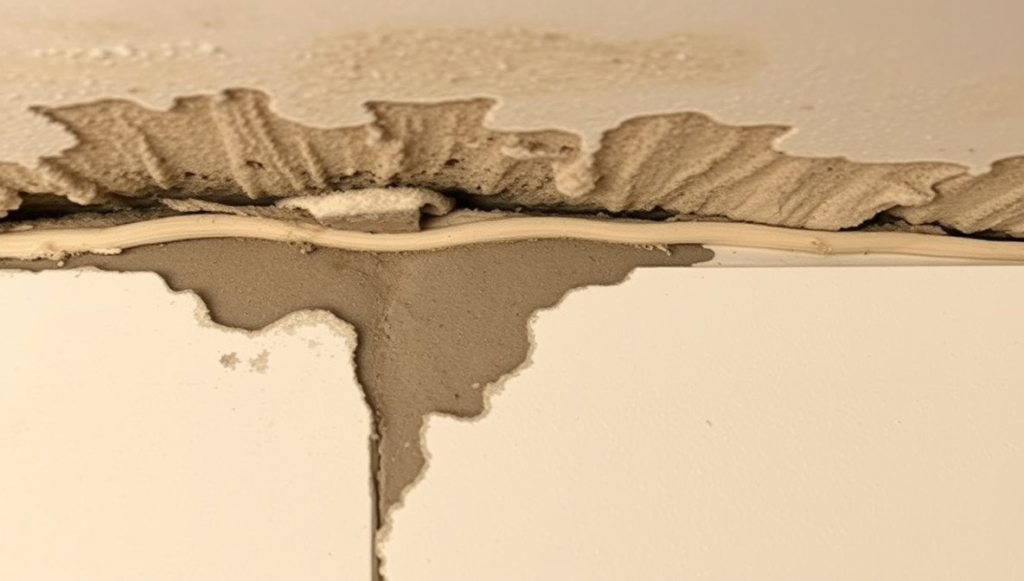
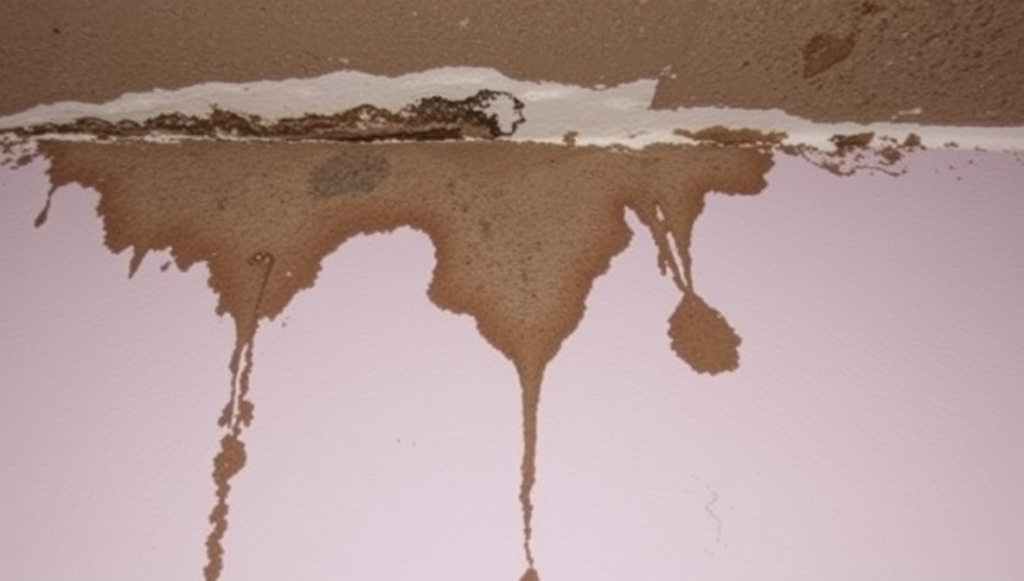
Surface mold (often appearing as bathroom tile discoloration or grout staining) is typically considered a minor habitability issue and falls within the standard 7–30 day repair window. Most states explicitly exclude minor surface mold from their urgent repair provisions.
Black mold (Stachybotrys chartarum) produces mycotoxins that affect breathing, memory, and immune function. Children, the elderly, and tenants with weakened immune systems are especially vulnerable. When black mold is present and connected to documented health symptoms, courts and code enforcement agencies treat it as an emergency — not a standard maintenance request. Tenants may not have to wait the full 30-day standard window, and can request immediate action, emergency relocation at the landlord’s expense, or expedited code enforcement involvement.
Structural mold — mold discovered inside walls, beneath flooring, or in HVAC systems — requires professional licensed remediation and may take longer than 30 days. However, the landlord is still obligated to take immediate containment steps (stopping the moisture source, preventing spread) while the full remediation plan is arranged.
What If Your Landlord Ignores You After 30 Days?
Landlord inaction after proper notice is where your legal leverage is strongest. Here is a prioritized escalation path:
- File a complaint with local code enforcement or housing authorities. They have independent enforcement power and can issue fines and citations the landlord cannot ignore.
- Contact your city or county health department. In many jurisdictions, health officials can declare a property uninhabitable and compel immediate action.
- Consult a tenant-rights attorney. Many offer free consultations. A demand letter from an attorney frequently produces results that months of tenant requests haven’t.
- File in small claims or housing court. For damages under your state’s small claims limit, you can represent yourself. For larger claims — especially those involving health harm — an attorney is advisable.
- Contact HUD or your local housing authority if you are in federally subsidized or Section 8 housing, where additional protections and complaint mechanisms apply.
Retaliation Protections: What Your Landlord Cannot Do After You Report
This is the most overlooked part of tenant mold rights, and it’s important.
After you submit a written mold complaint, many states legally prohibit your landlord from:
- Raising your rent in retaliation
- Issuing a notice to vacate or attempting eviction
- Reducing services or refusing maintenance requests
- Harassing or threatening you
California’s Civil Code 1942.5 is among the strongest in the country — it provides a 180-day anti-retaliation shield from the moment the landlord receives your written notice. Similar protections exist in Washington, Colorado, New York, and Illinois.
If you experience any of the above actions within weeks of submitting a mold complaint, document it carefully. Retaliatory conduct is itself a legal cause of action, and courts have awarded damages specifically for landlord retaliation separate from the mold claim itself.
Real Cases: What Courts Have Awarded Tenants
Reading real outcomes helps tenants understand what’s actually at stake — and it’s something no top-ranking competitor provides.
Maryland, 2024: A tenant successfully sued her landlord for negligence after severe mold growth caused chronic asthma. The court awarded damages covering medical expenses and temporary housing costs. The key to the case was documented proof that the landlord had received written notice and failed to act within a reasonable period.
Oregon (reported 2025): Tenants were allowed to break their lease without financial penalty after air quality testing revealed elevated mold spore counts in a unit with a persistent leak. The court treated the mold as a habitability violation equivalent to a broken heating system in winter.
Texas: Under Texas Property Code §92.056, courts have consistently found that landlords who fail to act after proper written notice lose the right to argue over repair costs — tenants who followed the correct repair-and-deduct procedure were awarded full cost reimbursement.
These cases share a common thread: documentation + written notice + allowing reasonable repair time is what gives tenants legal standing. Tenants who skipped written notice or withheld rent immediately without following proper procedures often lost their cases regardless of how bad the mold was.
Your Right to an Independent Mold Inspection
One detail most articles omit entirely: you have the right to hire your own certified mold inspector. Your landlord’s inspector — if they send one — does not override your right to independent verification.
This matters because there is a documented conflict-of-interest problem in landlord-selected inspections. Landlords who choose their own inspectors sometimes receive “no mold detected” reports even when visible mold is present. For any housing court proceeding or code enforcement complaint, inspectors with AIHA-EMPAT certification and no financial connection to the landlord carry significantly more weight.
If you suspect your landlord’s inspection is minimizing the problem, hire your own inspector, retain the report, and file it with any legal or code enforcement action you take.
Frequently Asked Questions
Can I withhold rent because of mold in my apartment?
In most states, yes — but only after you’ve sent proper written notice, allowed the legally required repair time, and (ideally) placed the withheld rent in an escrow account to show good faith in court.
Can I break my lease because of mold?
Yes, in many states you can terminate your lease without penalty if mold has made your unit uninhabitable and your landlord has failed to act after proper notice — this is known as constructive eviction.
Who pays for mold testing in a rental?
Generally, the landlord is responsible for inspection costs when mold results from a structural or maintenance issue. If you hire an independent inspector, that cost may be recoverable as part of a legal claim or repair-and-deduct deduction.
What if I caused the mold by not ventilating or reporting leaks?
If mold grew due to your own negligence — leaving windows open during storms, failing to report a visible leak for months, or not cleaning moisture-prone surfaces — the landlord’s legal responsibility is weakened and you may bear some or all of the remediation costs.
Does my landlord have to pay for a hotel while mold is being fixed?
In some states, yes. Colorado, for example, requires landlords to provide a comparable dwelling or hotel room within 24 hours if mold associated with dampness makes a unit uninhabitable — at the landlord’s expense. Check your state’s specific habitability statutes.
How long does my landlord have to fix mold in federally subsidized housing?
HUD-assisted and Section 8 properties must comply with Housing Quality Standards, which treat visible mold as a fail condition. Landlords in federally subsidized housing typically must remediate within 24–30 days or risk losing their housing authority contract — additional complaints can be filed directly with your local Public Housing Authority.
What is the statute of limitations for suing my landlord over mold?
It varies by state and claim type. In California, property damage claims typically have a three-year limit, while personal injury claims may be as short as two years from discovery. Consult an attorney promptly — waiting too long can permanently bar your ability to recover damages.
Final Takeaway
The question of how long does my landlord have to fix mold has a real answer — it just depends on where you live, how severe the mold is, and whether you follow the right steps to protect your legal rights. No state lets landlords ignore mold indefinitely. Every state’s warranty of habitability requires them to act.
Your power as a tenant comes from three things: documentation, written notice, and knowing your state’s law. With those three tools, you can hold a non-responsive landlord accountable — through code enforcement, rent remedies, or the courts — and do so from a position of legal strength rather than frustration.
