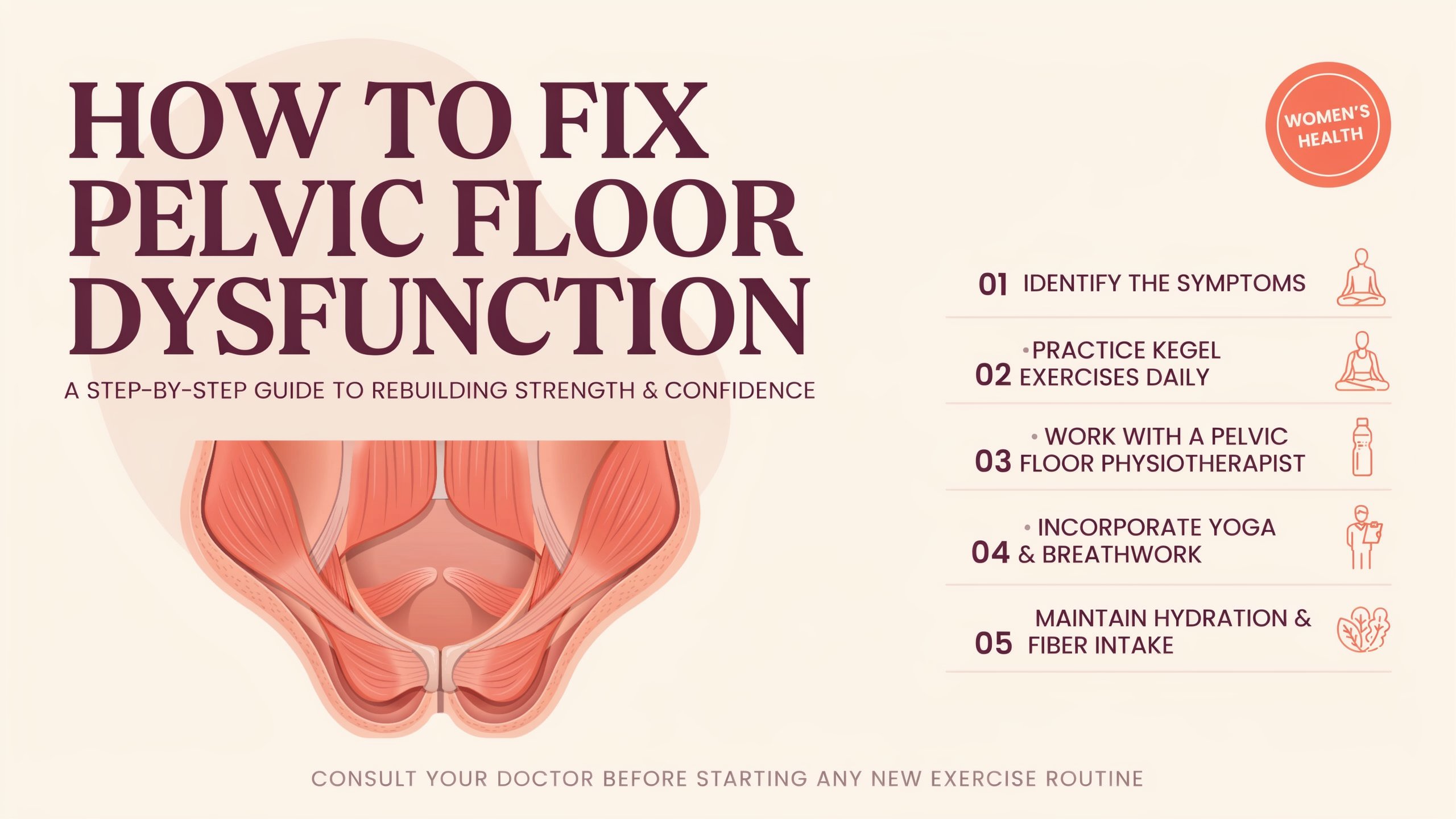
Pelvic floor dysfunction is far more common than most people realize, yet it’s rarely talked about openly. If you’ve been searching for how to fix pelvic floor dysfunction, you’re likely dealing with symptoms like constipation, urinary leakage, or pelvic discomfort that haven’t responded to simple lifestyle changes.
What Is Pelvic Floor Dysfunction?
Pelvic floor dysfunction refers to the inability to properly relax and coordinate the muscles of the pelvic floor, a group of muscles and connective tissue that support the bladder, uterus or prostate, and rectum. This lack of coordination can interfere with basic functions like urinating, having a bowel movement, and in some cases, sexual function.
Understanding how to fix pelvic floor dysfunction starts with recognizing that it isn’t a single condition but a spectrum. Some people have muscles that are too tight and overactive, while others have muscles that are too weak or loose. The right approach depends heavily on which pattern is present, which is why a proper assessment matters before starting any treatment plan.
Common Symptoms to Watch For
Symptoms vary depending on whether the underlying issue involves overly tense or overly weak muscles, but common signs include:
- Chronic constipation or straining during bowel movements
- Urinary urgency, frequency, or leakage
- A feeling of incomplete emptying of the bladder or bowel
- Pelvic pain or pressure, sometimes worsening with sitting
- Pain during intercourse
- Lower back pain that doesn’t respond to typical treatment
If several of these symptoms sound familiar, it’s a strong signal that a proper evaluation is worthwhile before attempting to address anything on your own.
What Causes Pelvic Floor Dysfunction
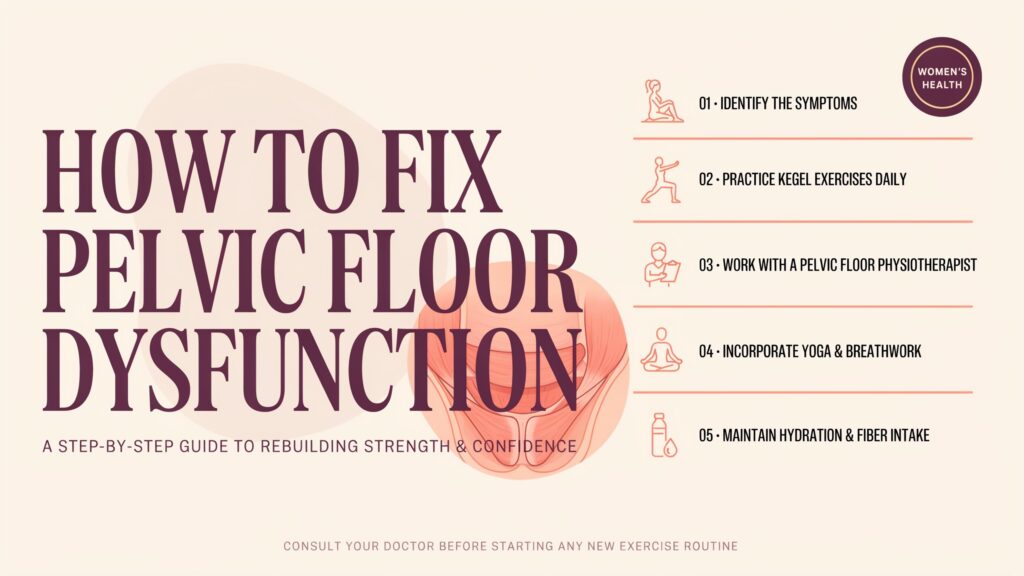
There isn’t a single cause, and understanding how to fix pelvic floor dysfunction often requires identifying which contributing factors apply to your situation. Common contributors include:
- Pregnancy and childbirth, which can stretch or weaken pelvic floor muscles
- Chronic straining from long-term constipation
- Surgery in the pelvic region
- Obesity, which places additional pressure on pelvic structures
- Aging and the natural decline in muscle tone
- Chronic stress, which can cause muscles to stay tense without conscious awareness
Getting a Proper Diagnosis First
Before diving into treatment, it’s worth understanding why professional evaluation matters so much here. A physical therapist or physician trained in pelvic health can determine whether your muscles are too tight, too weak, or poorly coordinated, information that fundamentally changes the treatment approach.
Trying generic strengthening exercises when your muscles are actually overly tense, for example, can make symptoms worse rather than better. This is one of the most important nuances in how to fix pelvic floor dysfunction effectively rather than through trial and error.
Treatment Options That Address the Root Cause
Once a proper assessment has identified the specific pattern of dysfunction, several treatment paths are commonly used.
| Treatment | Best Suited For | What It Involves |
|---|---|---|
| Pelvic floor physical therapy | Both tight and weak muscle patterns | Guided exercises, stretching, and coordination training with a specialist |
| Biofeedback | Muscle coordination issues | Sensors help you visualize muscle activity to improve control |
| Relaxation techniques | Overly tense pelvic muscles | Meditation, warm baths, yoga, and guided breathing |
| Trigger point injections | Persistent muscle tension unresponsive to therapy | A specialist injects numbing medication into overly tight muscles |
| Bladder or bowel training | Urinary or bowel symptoms | Adjusting routines and habits under professional guidance |
| Medication | Symptom management | Prescribed to support bladder or bowel function |
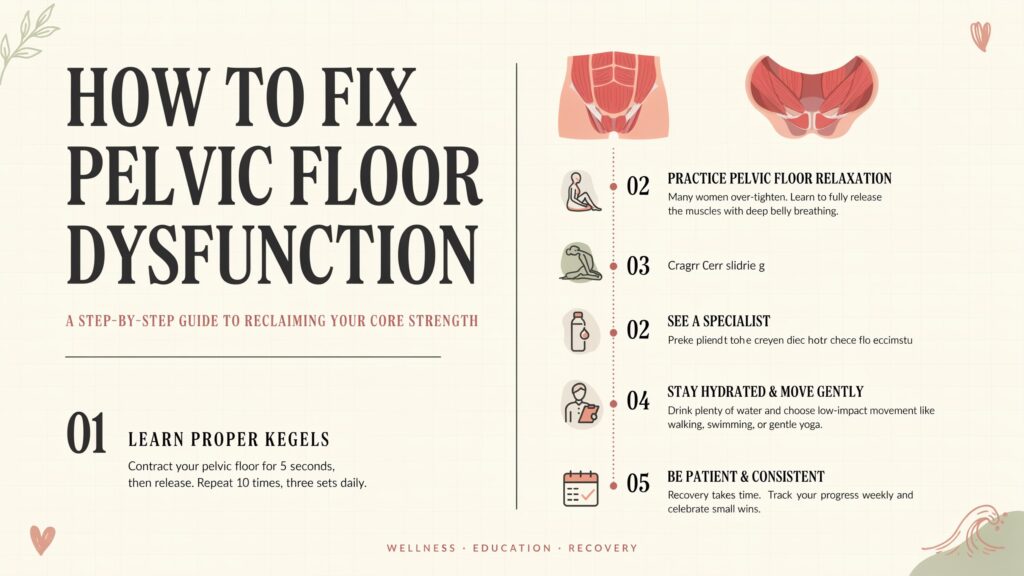
Most treatment plans combine several of these approaches rather than relying on just one. Consistency tends to matter more than intensity, since it can take several months of regular therapy sessions before noticeable improvement appears.
Exercises Commonly Used in Recovery
Exercise plays a central role in how to fix pelvic floor dysfunction for many people, particularly when weakness or poor coordination is involved. It’s important to note that these exercises are typically introduced under professional guidance, since the wrong exercise for your specific pattern of dysfunction can worsen symptoms.
Commonly recommended exercises include:
- Pelvic floor contractions (Kegels). Performed by gently contracting the muscles used to stop urine flow, holding briefly, then releasing. These are most useful for weakness-related dysfunction rather than tension-related dysfunction.
- Pelvic tilts. Lying on your back with knees bent, tightening the abdominal muscles and pressing the lower back into the floor, then releasing. This supports overall core and pelvic stability.
- Bird-dog exercises. Performed on hands and knees, extending one arm and the opposite leg while keeping the back stable, engaging multiple muscle groups including the pelvic floor.
- Diaphragmatic breathing. Deep, controlled breathing that helps the pelvic floor relax and coordinate properly with the diaphragm.
- Gentle stretching routines. Often incorporated for those with overly tense muscles, focusing on the hips, lower back, and inner thighs.
Consistency matters more than intensity here. Most guidance suggests performing targeted exercises two to three times per week, gradually building duration and repetitions as strength or coordination improves.
Lifestyle Adjustments That Support Recovery
Alongside formal therapy, several everyday adjustments commonly support progress:
- Increasing fiber intake through foods like berries, broccoli, and leafy greens to ease bowel movements
- Reducing caffeine and artificial sweeteners, which can irritate the bladder
- Adjusting fluid intake based on your specific symptoms
- Avoiding prolonged straining during bowel movements
- Managing stress levels, since chronic tension often shows up physically in the pelvic region
- Maintaining a healthy weight to reduce pressure on pelvic structures
What Recovery Timelines Typically Look Like
One of the most common questions people have when researching how to fix pelvic floor dysfunction involves how long recovery actually takes. Realistic expectations matter here, since progress is usually gradual rather than immediate.
- Early sessions often focus on identifying the correct muscles and movement patterns rather than building strength.
- Noticeable symptom improvement frequently takes several months of consistent physical therapy.
- Biofeedback has been shown to help a large majority of people achieve better muscle control over time.
- Skipping sessions or neglecting home exercises tends to slow progress and can allow symptoms to persist or worsen.
When Non-Surgical Options Aren’t Enough
For most people, non-surgical approaches such as physical therapy, biofeedback, and lifestyle changes are sufficient. However, in cases where these methods don’t provide adequate relief, additional options may be considered, including:
- Vaginal support devices or weighted cones for certain types of pelvic floor weakness
- Electrical stimulation to help retrain muscle activity
- Minimally invasive surgical procedures, typically reserved for cases where conservative treatment hasn’t worked
These more advanced interventions are generally discussed only after a thorough trial of conservative treatment, and always in consultation with a specialist familiar with your specific diagnosis.
Frequently Asked Questions
Can pelvic floor dysfunction go away on its own?
Generally, no. Symptoms tend to persist or worsen without targeted treatment, which is why addressing the issue early rather than waiting is usually recommended.
How do I know if my pelvic floor muscles are too tight or too weak?
This distinction typically requires an assessment from a pelvic floor physical therapist or physician, since the symptoms can overlap even though the appropriate treatment differs significantly.
Are Kegel exercises always the right solution?
Not necessarily. Kegels are helpful for muscle weakness but can worsen symptoms in people whose pelvic floor muscles are already too tense, which is why professional guidance matters before starting any exercise routine.
How long does it take to see improvement?
Many people notice initial changes within a few months of consistent physical therapy, though full symptom improvement can take longer depending on the severity and type of dysfunction.
Is pelvic floor dysfunction only a concern for women?
No. While it’s often discussed in the context of pregnancy and childbirth, pelvic floor dysfunction can affect men as well, particularly related to prostate health, chronic straining, or pelvic surgery.
What happens during a pelvic floor physical therapy session?
Sessions typically involve an assessment of muscle tone and coordination, followed by targeted exercises, stretching, or biofeedback training tailored to whether your muscles are overly tense or weak.
Can lifestyle changes alone resolve the condition?
For milder cases, dietary adjustments, stress management, and posture changes can help, but most moderate to significant cases benefit from a combination of professional therapy and lifestyle support rather than lifestyle changes alone.
Final Thoughts
Recovering from pelvic floor dysfunction is rarely a quick fix, but it is very often a manageable one with the right combination of professional guidance, targeted exercises, and consistent lifestyle support. Because treatment depends so heavily on whether your specific pattern involves muscle tightness, weakness, or poor coordination, working with a qualified pelvic health specialist remains the most reliable path toward lasting improvement. If your symptoms are affecting daily life, it’s worth reaching out to a healthcare provider who can guide you toward the approach best suited to your situation.
