A running toilet is one of the most common plumbing annoyances in American homes, and also one of the easiest to fix once you understand what’s actually happening inside the tank. If you’ve ever lain awake listening to water trickle long after a flush, you already know why so many homeowners search for how to fix a running toilet every single day. The good news is that in most cases, you don’t need a plumber, a toolbox full of specialty equipment, or any prior experience with home plumbing repairs.
This guide takes a different approach than most toilet repair articles you’ll find online. Instead of dumping every possible fix on you at once, we’ll start with a quick diagnostic process so you can identify exactly what’s wrong before you touch a single part. From there, we’ll walk through every major repair step by step, cover modern toilet types that older guides ignore, show you how much a running toilet is actually costing you, and help you decide when it’s time to call in a professional. By the end, you’ll know how to fix a running toilet for good, not just temporarily quiet it down until the next flush.
Why Does a Toilet Keep Running?
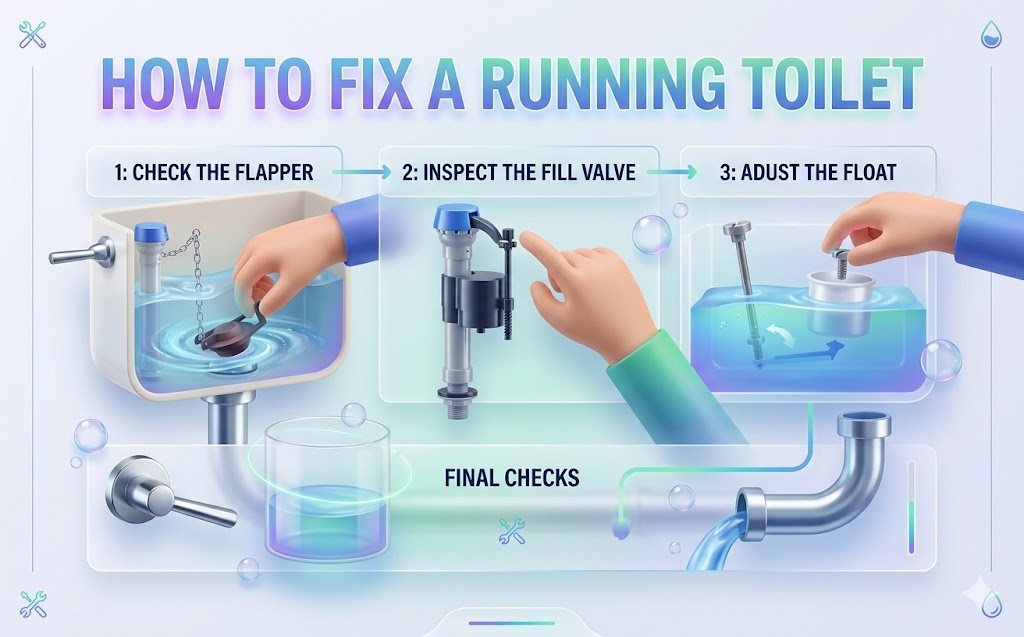
Before jumping into repairs, it helps to understand what a “running” toilet actually means mechanically. When you press the flush handle, a flapper or flush valve lifts inside the tank, releasing water into the bowl. As the tank empties, a float (either a ball or a cup, depending on your toilet’s age) drops with the water level. That drop triggers the fill valve to start refilling the tank. Once the water reaches a preset level, the float rises back up and shuts the fill valve off.
A running toilet happens when something interrupts that cycle. Either the flapper isn’t sealing properly and water keeps leaking from the tank into the bowl, the fill valve never fully shuts off, or the float is set incorrectly and the water level never reaches the point where it should stop. Understanding this cycle is the foundation of learning how to fix a running toilet, because almost every repair you’ll make targets one of these three components.
There’s also a financial reason to take this seriously beyond the annoying sound. A continuously running toilet can waste well over 100 gallons of water per day, and in more severe cases significantly more than that. Over a billing cycle, that adds up to a noticeably higher water bill, which is exactly why so many people look up how to fix a running toilet the moment they notice the sound instead of ignoring it.
Toilet Anatomy: What’s Inside the Tank
If you’ve never opened a toilet tank before, the inside can look intimidating. In reality, there are only a handful of parts you need to recognize:
The fill valve is usually the tallest component, often positioned on the left side of the tank. It controls how water flows into the tank after a flush.
The float sits on or around the fill valve. Older toilets use a ball float attached to a metal arm, while newer toilets typically use a float cup that slides up and down a vertical rod.
The flush valve sits in the center of the tank, at the bottom. The flapper (a rubber or plastic seal) sits on top of the flush valve opening and lifts when you flush.
The overflow tube rises from the center of the tank and exists purely as a safety feature, redirecting water into the bowl if the tank ever overfills.
The flush handle and chain connect the outside lever to the flapper, lifting it when you push the handle.
Knowing these five parts by name and location makes every repair step in this guide far easier to follow, and it’s the difference between blindly following instructions and actually understanding how to fix a running toilet with confidence.
Quick Diagnostic: Identify the Cause Before You Start
Most articles on how to fix a running toilet ask you to check every component one by one, which wastes time. Instead, use this faster diagnostic approach.
First, remove the tank lid and set it somewhere safe (tank lids crack easily if dropped or knocked). Without flushing, observe the water level. If water is actively spilling into the overflow tube, your float is set too high or your fill valve isn’t shutting off completely. If the water level looks normal and isn’t overflowing, but you can still hear running water, the problem is almost certainly the flapper not sealing.
Next, do the dye test. Add a few drops of food coloring to the tank water, wait about 15 to 20 minutes without flushing, and then check the bowl. If colored water has made its way into the bowl, your flapper is leaking and needs attention. If the bowl water stays clear but you still hear the fill valve cycling on its own periodically, the issue is more likely a fill valve that isn’t sealing shut internally.
Finally, listen for timing. If the toilet runs constantly without any flush, it’s typically a flapper or fill valve seal issue. If it only runs intermittently, every few minutes or hours, you’re likely dealing with a slow leak through the flapper that gradually drops the water level until the fill valve briefly kicks on to top it back up. This “phantom flushing” pattern is one of the most overlooked scenarios in standard guides, but it’s incredibly common and almost always traces back to a worn flapper.
This diagnostic process is the part most tutorials skip, but it’s genuinely the fastest way to learn how to fix a running toilet without wasting an afternoon swapping parts that were never broken in the first place.
Quick Diagnostic & Troubleshooting Reference
Use this table to match what you see inside the tank with the most likely cause and immediate fix.
| Symptom / Test Result | Root Cause | Recommended Action |
| Water spilling into the overflow tube | Float set too high OR faulty fill valve | Adjust the float down; clean or replace the fill valve. |
| Dye test reveals colored water in bowl | Worn or poorly seated flapper | Clean or replace the rubber flapper. |
| “Phantom Flushing” (Runs for a few seconds intermittently) | Slow leak through the flapper | Replace the flapper; ensure the chain isn’t caught. |
| Water level normal, but fill valve runs constantly | Internal fill valve seal failure | Flush out debris or replace the fill valve. |
| Chain is taut; flapper held slightly open | Chain is too tight / lacks slack | Move the clip down 1–2 links to add slack. |
Tools and Materials You’ll Need
You don’t need a professional plumbing kit to handle most of these repairs. Gather the following before you start:
An adjustable wrench, a Phillips and flathead screwdriver, a sponge or small towel, rubber gloves, a small bucket, and optionally a shop vac for removing tank water completely. For replacement parts, a universal flapper typically costs between five and fifteen dollars, a replacement fill valve runs roughly ten to twenty-five dollars, and a complete toilet repair kit with both parts included usually costs twenty to forty dollars at most hardware stores. Compare that to a plumber service call, which commonly starts around 150 to 300 dollars depending on your region, and it’s clear why learning how to fix a running toilet yourself is worth the modest time investment.
How to Fix a Running Toilet Caused by a Faulty Flapper
The flapper is the single most common cause of a running toilet, and replacing it is usually the cheapest and easiest fix on this list.
Start by shutting off the water supply valve, located on the wall behind or beside the toilet. Turn it clockwise until it stops. Flush the toilet to drain most of the tank, holding the handle down to let as much water out as possible. Use a sponge to soak up any remaining water at the bottom of the tank so you can work without splashing.
Locate the flapper at the base of the tank and disconnect the chain from the flush lever arm. Most flappers either have ears that hook onto pegs on either side of the overflow tube, or a ring that slides over the tube itself. Remove the old flapper and inspect it. If you see cracking, warping, sliminess, or mineral buildup that won’t wipe away, replacement is the right move rather than cleaning.
Bring the old flapper to the hardware store if possible, since flapper sizes and shapes vary between toilet brands and models. Installing the wrong style is one of the most common reasons people think they’ve fixed the problem, only to find the toilet running again within days. Install the new flapper, reconnect the chain with just a small amount of slack (enough that the flapper can close completely flat, but not so much slack that it could shift out of position), turn the water back on, and test with a few flushes.
This single repair resolves a large percentage of all running toilet calls, and it’s usually the first thing worth checking when you’re researching how to fix a running toilet for the first time.
How to Fix a Running Toilet Caused by a Faulty Fill Valve
If your diagnostic test pointed toward water spilling into the overflow tube, or if the fill valve never fully shuts off even after adjusting the float, the fill valve itself may need cleaning or replacement.
Sometimes the issue is just debris lodged inside the valve seat, particularly common in homes with older pipes or after recent water main work in the area. Turn off the water supply, flush to drain the tank, and remove the fill valve cap according to your model’s design (refer to the small set of instructions usually printed on the valve itself, since designs vary by manufacturer). Flush out any sediment with a cup of water poured directly into the valve opening, then reassemble and test.
If cleaning doesn’t resolve it, full replacement is straightforward. Disconnect the water supply line from the bottom of the tank, unscrew the locknut holding the fill valve in place, and lift the old valve out. Insert the new fill valve, following the height adjustment instructions included in the package (most are adjustable to match your tank height), tighten the locknut by hand plus a half turn, reconnect the supply line, and turn the water back on slowly while checking for leaks at every connection point.
This is a slightly more involved repair than the flapper fix, but it’s still well within reach for most homeowners and is a critical piece of the puzzle when you’re trying to permanently solve how to fix a running toilet rather than applying a temporary patch.
How to Fix a Running Toilet Caused by a Float Problem
Even with a perfectly good fill valve, an incorrectly positioned float can keep your toilet running by allowing the water level to rise too high and spill continuously into the overflow tube.
For ball-float toilets, locate the screw where the float arm meets the fill valve, or simply bend the metal arm slightly downward. This lowers the water level the float allows before shutting the valve off. For float-cup toilets, look for a clip or screw on the side of the fill valve column. Turning this screw or adjusting the clip downward lowers the float’s resting position, which in turn lowers the maximum water level.
The target water level should sit about one inch below the top of the overflow tube. After each adjustment, flush the toilet and observe where the water settles before making further changes. It often takes two or three small adjustments to get it exactly right.
A correctly calibrated float is an essential, frequently overlooked step in how to fix a running toilet, because even a brand-new flapper and fill valve will keep your toilet running constantly if the float lets water rise too high every single cycle.
Cost Comparison: DIY vs. Professional Plumber
Fixing a running toilet yourself is one of the most cost-effective home maintenance tasks you can perform.
| Repair Element | DIY Cost (Estimated) | Professional Plumber Cost (Estimated) |
| Universal Flapper Only | $5 – $15 | $150 – $300+ (Standard diagnostic fee + labor) |
| Replacement Fill Valve | $10 – $25 | $150 – $300+ |
| Complete Toilet Repair Kit (Valve + Flapper) | $20 – $40 | $200 – $350+ |
| Time Investment | 20 to 60 minutes | Shifting schedule to wait for arrival window |
How to Fix a Running Toilet Caused by a Broken Handle or Chain
Sometimes the simplest explanation is the right one. A tangled, too-tight, or too-loose chain between the flush handle and the flapper can prevent the flapper from sealing correctly, leading to a slow but constant leak into the bowl.
Open the tank and examine the chain. If it’s tangled around the overflow tube or the fill valve arm, simply untangle it and allow the flapper to rest flat. If the chain has too much slack, slide the connector to the next link to shorten it slightly. If it’s too tight, the flapper may be held slightly open even when the handle is at rest, so lengthen it by moving down a link or two.
Also check the handle itself. The mounting nut inside the tank holding the handle in place has reverse threads, meaning you loosen it by turning clockwise and tighten it by turning counterclockwise. A loose handle can fail to fully lift the flapper or fail to let it drop completely, and a handle that’s been over-tightened can crack the tank, so adjust gently.
This is the fastest fix on the entire list, often taking less than five minutes, and it’s worth ruling out before you spend money on replacement parts.
How to Fix a Running Toilet Caused by Overflow Tube Issues
This cause gets far less attention in most guides, but it’s worth checking, especially after a recent fill valve replacement. If the overflow tube is cracked, too short, or positioned at the wrong height relative to your fill valve’s critical level mark, water will continuously drain into it even with a properly functioning flapper and fill valve.
Inspect the tube for visible cracks or damage. If the fill valve sits at its maximum adjustable height but water still spills into the overflow tube, you may need to shorten the tube slightly using a hacksaw so it sits about one inch below the fill valve’s marked critical level line. This is a less common repair, but it explains the rare cases where someone has replaced every other part and the toilet still won’t stop running.
How to Fix a Running Toilet on Dual-Flush and Modern Models
Most toilet repair guides were written with traditional single-handle toilets in mind, leaving owners of newer dual-flush, pressure-assisted, and one-piece toilets without clear instructions. If you have one of these models, the underlying causes are similar, but the components look different.
Dual-flush toilets typically use a button-style flush mechanism on top of the tank rather than a side handle, connected to a canister-style flush valve instead of a traditional flapper. If your dual-flush toilet keeps running, the seal at the base of this canister is the equivalent of a flapper and may need cleaning or replacement with a model-specific canister kit rather than a universal flapper.
Pressure-assisted toilets, common in some apartments and commercial-style installations, use a pressurized tank within the tank and generally require manufacturer-specific replacement parts rather than generic hardware store kits. If you’re unsure which type you have, check the underside of the tank lid or search your toilet’s model number, usually stamped inside the tank, before purchasing parts.
Smart toilets and toilets with built-in bidet features sometimes have additional valves and sensors that can mimic a running toilet symptom if they’re cycling water for cleaning functions. If yours has these features, consult the manufacturer’s troubleshooting guide before assuming it’s a standard mechanical issue.
How Much Is a Running Toilet Actually Costing You?
It’s worth pausing to put real numbers behind the problem, because the cost is often higher than people expect. A toilet that runs continuously can waste anywhere from 100 to over 200 gallons of water per day depending on the severity of the leak. Multiply that by your local water rate (commonly between 0.004 and 0.01 dollars per gallon in many U.S. municipalities, though rates vary significantly by region) and even a moderate leak can add ten to thirty dollars or more to a single monthly water bill.
A quick way to estimate your own situation: time how long it takes to fill a one-gallon container from your bathroom sink, then listen to how long your toilet runs after a flush and estimate the flow rate similarly, or use the dye test described earlier to confirm whether you’re dealing with a slow drip or a constant flow. Even a “silent” leak that you can’t hear can waste thousands of gallons over a few months, which is exactly why learning how to fix a running toilet pays for itself almost immediately compared to letting it run unaddressed.
DIY vs. Calling a Plumber
Most running toilet repairs fall comfortably within DIY territory, but there are a few signs it’s time to call a professional instead of continuing to troubleshoot on your own.
If you notice water pooling at the base of the toilet or along the wall behind it, this could indicate a cracked tank, a failing wax ring seal, or a supply line connection issue rather than a simple internal component failure, and continuing to use the toilet could cause water damage. If your shutoff valve is corroded, stuck, or won’t fully stop water flow, a plumber will need to address that before any tank repair can safely proceed. And if you’ve replaced the flapper, fill valve, and float, checked the chain, and the toilet still runs, there may be a less common issue, such as a cracked flush valve seat, that requires professional diagnosis.
For the vast majority of cases, though, the parts cost under forty dollars and the repair takes less than an hour, making DIY the clear first choice before paying for a service call.
Preventive Maintenance: Stop Future Problems Before They Start
Once you’ve solved the immediate issue, a little maintenance goes a long way toward avoiding a repeat. Flappers typically last between three and five years before rubber degradation causes leaks again, so consider replacing yours proactively if it’s original to an older toilet. Avoid in-tank bleach tablets and chlorine-based cleaning drops, since these accelerate rubber flapper deterioration significantly faster than normal use. Periodically check your water level against the overflow tube mark, especially after any plumbing work elsewhere in the house that could affect water pressure. And keep an extra flapper or repair kit on hand, since they’re inexpensive and having one ready means you can fix a sudden running toilet the same day it starts rather than living with the noise and the water bill for a week while you shop for parts.
Final Thoughts
A running toilet is rarely a sign of a serious plumbing emergency, but it is a problem worth addressing quickly given how much water and money it can waste over time. By starting with a proper diagnosis instead of guessing, understanding which of the five main components is failing, and following the specific repair steps for that part, most homeowners can resolve the issue in under an hour with parts that cost less than a takeout dinner. Whether you’re dealing with a worn flapper, a misadjusted float, a sticking fill valve, or a tangled chain, this guide covers exactly how to fix a running toilet across nearly every toilet type found in American homes today, including the dual-flush and modern models that older repair guides tend to overlook.
Frequently Asked Questions
Why does my toilet run for a few seconds every few minutes?
This is typically called phantom flushing, and it almost always points to a slow flapper leak letting water drip out just enough that the fill valve briefly kicks on to top off the tank.
I replaced the flapper, but my toilet still runs. What’s wrong?
This usually means the new flapper isn’t the correct size or shape for your specific flush valve, or the float water level is set too high and spilling into the overflow tube.
Is it safe to leave a running toilet overnight?
Yes, it’s generally safe, but it wastes a significant amount of water and money, so it’s best addressed as soon as possible rather than left indefinitely.
How much does it cost to fix a running toilet myself?
Most repairs cost between five and forty dollars in parts, compared to a typical plumber service call that often starts around 150 dollars or more.
Can hard water cause a running toilet?
Yes, mineral deposits from hard water can prevent the flapper from sealing properly and can also clog the fill valve, both of which are common causes of a running toilet in homes with hard water.
Why does my toilet run only at night?
This can happen due to water pressure fluctuations overnight or a very slow flapper leak that becomes more noticeable in a quiet house, and it’s worth running the dye test described earlier to confirm a flapper leak.
Should I turn off my water if my toilet won’t stop running?
If you can’t resolve it immediately, turning off the shutoff valve behind the toilet stops the water waste and any flooding risk until you have time to complete the repair.
